
What AI chat app has no filter?
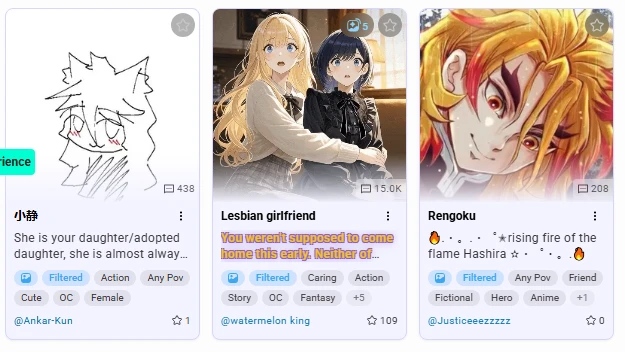
AI chat apps with no filter are usually not completely unrestricted systems. Most users looking for fewer limits choose platforms with customizable settings, open-source models, or services designed for flexible conversations. Commercial tools such as ChatGPT and Claude apply safety rules, while local models allow more user control. Platforms like CrushOn AI provide character-based conversations with fewer restrictions compared with many mainstream assistants. The choice depends on whether users prioritize creativity, privacy, customization, or general AI performance. For maximum flexibility, locally hosted open models remain the closest option to a less filtered AI experience.
The phrase “AI chat app with no filter” became more popular after AI assistants entered mainstream use between 2022 and 2025. Users began comparing different platforms based on how freely they handle roleplay, creative writing, personal conversations, and sensitive discussions. A 2024 survey from industry reports showed that more than 60% of AI chatbot users had tried multiple AI services rather than staying with one platform, mainly because different apps provide different conversation styles and restrictions.
A “no filter” AI does not usually mean a system without any rules. It often refers to fewer content restrictions, more personality control, and greater freedom in conversation settings.
Most large AI companies use multiple layers of moderation. These layers can include training methods, automated detection systems, and platform rules. For example, ChatGPT, Claude, and Gemini are built for general users, businesses, and education, so they follow specific safety standards. These systems are optimized for reliability, with millions of daily users accessing them for writing, coding, research, and productivity tasks.
The difference between mainstream AI and flexible AI platforms is mainly related to customization. Many users do not need an AI without any limits; they want an assistant that follows their preferred communication style and does not interrupt fictional or creative conversations.
| Type of AI platform | Main feature | Typical users |
|---|---|---|
| Commercial AI assistants | General knowledge and productivity | Students, professionals, companies |
| Character-based AI apps | Personality-focused conversations | Creative users, roleplay communities |
| Local AI models | User-controlled settings | Developers and advanced users |
Character-based AI platforms have grown quickly because they focus on interaction rather than only answering questions. Instead of providing a standard assistant, these apps allow users to create or communicate with AI personalities. Character AI, for example, became widely known for fictional conversations and customized characters after launching in 2022.
However, many character platforms still apply moderation systems. Users who want fewer restrictions often look for services that provide more flexible conversation environments. One example is https://crushon.ai/, which focuses on AI character conversations and gives users more control over character settings and interaction styles compared with many traditional chatbot products.
Users often choose these platforms because they want longer conversations, consistent personalities, and fewer interruptions during creative scenarios.
Open-source AI models represent another option for users who want more control. Since models such as Llama, Mistral, and Qwen became widely available after 2023, individuals and companies started running AI systems on personal computers or private servers.
A local AI setup changes how restrictions work. Instead of relying completely on a company-operated chatbot, users can select models, adjust prompts, and configure their own interfaces. According to open-source AI community reports, thousands of models were available through public repositories by 2025, covering different sizes from lightweight models under 10 billion parameters to large models exceeding 70 billion parameters.
| Option | Internet required | Customization level | Setup difficulty |
|---|---|---|---|
| Online AI chatbot | Usually yes | Medium | Low |
| Local AI application | No after installation | High | Medium |
| Self-hosted server | Optional | Very high | High |
Running AI locally also requires suitable hardware. Smaller models can operate on consumer computers with 16GB to 32GB of RAM, while larger models may require high-end GPUs. Hardware availability affects the quality and speed of responses, so local AI is not always the easiest choice for everyday users.
Privacy is another reason some users prefer local AI systems. Online chat applications process conversations through company servers, while local models can keep data on personal devices. For users discussing private projects, personal notes, or confidential material, local processing may offer more control.
At the same time, local AI has limitations. A smaller model running on a personal computer may not match the performance of large cloud-based systems trained with massive computing resources. A 70-billion-parameter model can require significantly more memory than a 7-billion-parameter model, but larger size does not always guarantee better responses in every situation.
The meaning of “no filter” also changes depending on the purpose of using AI. A writer creating fictional stories may want fewer restrictions on character behavior, while a company using AI for customer service may prefer stronger controls.
Different users usually look for different features:
-
Writers often prefer creative freedom and longer conversations.
-
Developers usually prefer model access and technical control.
-
Businesses often require stable output and compliance features.
-
Casual users usually prefer simple interfaces.
The AI market has expanded rapidly since 2022, with millions of people using chatbot applications every month. As more platforms appear, users are moving from asking “Which AI is the smartest?” toward asking “Which AI fits my preferred way of using it?”
Commercial assistants continue to improve their reasoning, language ability, and productivity features. Meanwhile, flexible AI platforms and open-source models continue attracting users who want more customization. Both directions serve different purposes rather than replacing each other.
For users searching for an AI chat app with fewer restrictions, the available choices usually fall into three categories: mainstream assistants for reliable daily tasks, character platforms for personalized conversations, and local models for maximum user control. The best option depends on how much customization, privacy, and flexibility a person expects from their AI experience.